A perceptual standard for road typography calibrated to the geometry of low-angle vision
Road Marking 2.0 (2013–) addresses the threshold at which road information must remain legible to drivers in motion at acute viewing angles.
Conventional road markings have largely been shaped by installer experience, subjective judgment, and construction convenience — not perceptual calibration. No clear standard exists for low-angle legibility.
The system introduces a method to compensate for perspectival distortion caused by vanishing-point geometry at acute viewing angles below 10 degrees, establishing precise standards of proportion and form. Beginning with typographic markings, the framework extends to symbols, pictograms, and other spatial signals that must remain legible in motion.
Rather than treating road markings as static graphic instructions, the project begins from the moment drivers actually perceive information. It reframes road typography as a perceptual interface rather than a graphic surface.
RM 2.0 forms the foundational stage of SHINHO's long-term investigation into how visual structures remain legible under unstable perceptual conditions — a framework that extends beyond road infrastructure toward emerging augmented and wearable vision environments.
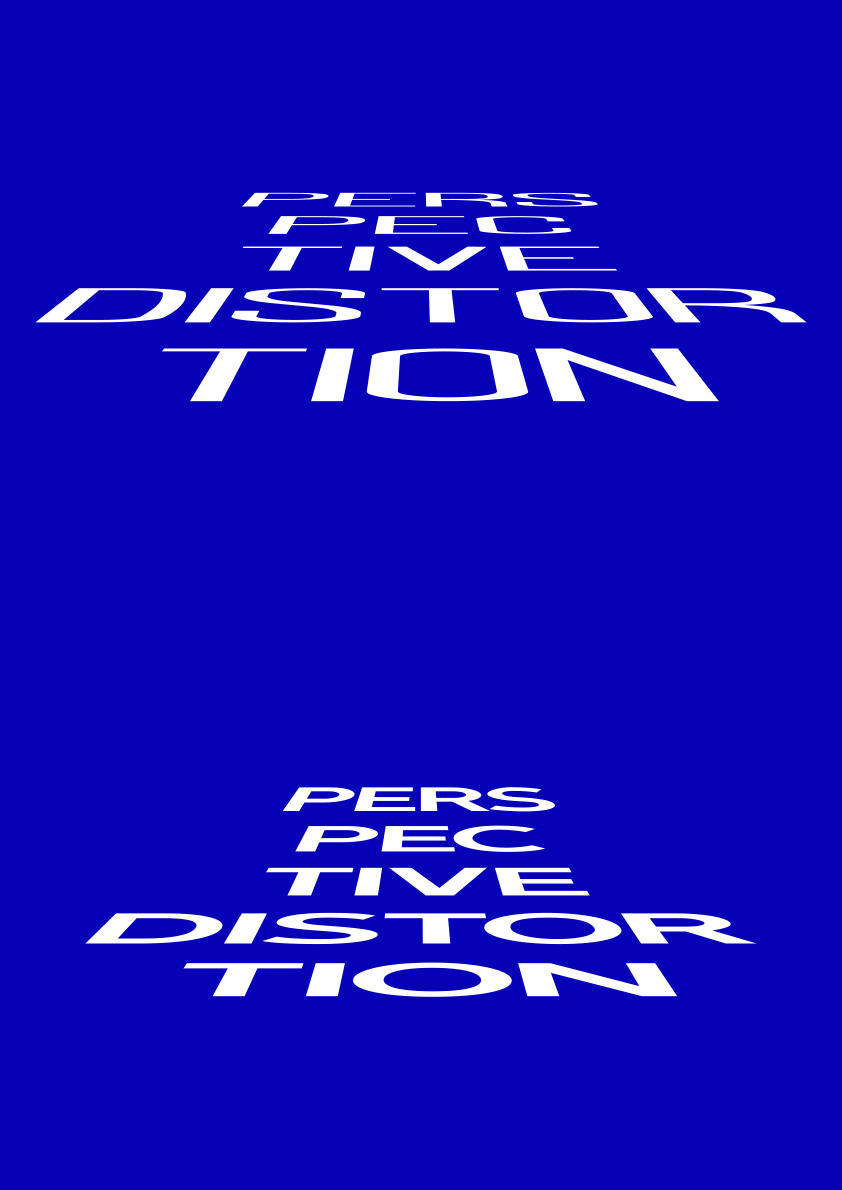
1.0 - 2.0